

Best Fabrics for Comfortable Everyday Wear in 2026
Table of Contents
- What Makes a Fabric Truly Comfortable for Everyday Wear?
- Natural vs Synthetic Fabrics for Comfort: A Side-by-Side Comparison
- The Best Fabrics for Comfortable Everyday Wear by Climate
- Fabric Longevity and Pilling: Which Everyday Fabrics Last?
- Best Low-Maintenance Fabrics for Busy Lifestyles
- How to Style Loungewear for Work Without Sacrificing Comfort
- Our Favorite Everyday Pieces Made from Comfort-First Fabrics
- Conclusion
- Frequently Asked Questions
Last Updated: September 8, 2026
Choosing the best fabrics for comfortable everyday wear often feels like a guessing game between softness and durability, style and function. Fabric choice determines whether a piece becomes a weekly staple or gets relegated to the back of your closet. Below, we break down the science of textile comfort so you can build an everyday wardrobe that feels as good as it looks.
What Makes a Fabric Truly Comfortable for Everyday Wear?
Most guides define comfort through breathability and moisture-wicking, but those metrics only tell half the story. True everyday comfort is a function of four measurable properties, breathability, moisture-wicking capacity, hand-feel, and stretch recovery, plus a fifth factor: how the fabric feels against your skin over an eight-hour wear cycle, especially for individuals with sensory sensitivities.
The Four Physical Properties That Drive Comfort
Breathability is measured by air permeability, how easily air passes through the fabric structure. Open weaves (linen, gauze) and fine-gauge knits (modal, micromodal) score highest. Moisture-wicking depends on a fiber's moisture regain, its ability to absorb water vapor from the air. Cotton has a moisture regain of about 8.5%, meaning it can hold that much of its weight in moisture before feeling damp (peer-reviewed research). Polyester sits near 0.4%, which is why it traps sweat against the skin unless specially engineered with hydrophilic finishes.
Hand-feel, the tactile sensation of fabric against skin, is determined by fiber diameter, surface texture, and weave density. Microfiber polyester filaments are finer than silk, which is why activewear can feel smooth despite being synthetic. Stretch recovery measures how well a garment returns to its original shape after being pulled. Spandex content of 5-12% provides the recovery that prevents bagging at the knees and elbows by midday.
The Missing Metric: Tactile Comfort and Sensory Processing
Here is where most fabric guides stop, and where everyday comfort actually breaks down. For roughly 1 in 6 people with sensory processing differences (including many autistic individuals and those with ADHD), fabric texture is a dealbreaker. Seams, tags, and certain weaves can make a garment unwearable, regardless of how breathable or moisture-wicking it claims to be.
The tactile triggers are specific and measurable. Rough or scratchy fibers (low-grade wool, unbrushed linen) stimulate mechanoreceptors more aggressively than smooth fibers. Tight weaves with high friction (poplin, stiff denim) create a dragging sensation during movement. Raised textures (fleece, terry cloth) can feel either comforting or overwhelming depending on the individual's sensory profile.
For sensory-sensitive wearers, the most comfortable fabrics share three characteristics:
- Smooth, continuous filaments, Modal, lyocell, and micromodal have a silk-like surface with no protruding fiber ends, minimizing tactile stimulation.
- Flat, low-profile seams, Flatlock stitching or seamless construction eliminates the ridge that rubs against skin.
- Minimal finishing agents, Fabrics treated with heavy softeners or anti-wrinkle chemicals can leave a residue that feels sticky or slick; OEKO-TEX-certified fabrics limit these finishes.
Why Blends Beat Single Fibers for All-Day Wear
No single fiber excels across all four physical properties. Cotton breathes but lacks stretch recovery. Polyester stretches but traps heat. The most comfortable everyday garments are engineered blends that compensate for each fiber's weaknesses. A cotton-modal-spandex blend (roughly 55/40/5) delivers the breathability of cotton, the silky hand-feel of modal, and the stretch recovery of spandex.
The weave structure matters just as much as the fiber content. A jersey knit with a tight, fine gauge feels smoother against skin than a loose, coarse knit of the same fiber. A twill weave adds durability but increases surface friction. Understanding these mechanics helps you read a fabric's comfort potential before you ever try it on.
Natural vs Synthetic Fabrics for Comfort: A Side-by-Side Comparison
Natural fibers such as cotton, linen, and bamboo excel at breathability and moisture absorption, making them skin-friendly and hypoallergenic for most people. Synthetic fibers like polyester and nylon offer superior durability, tensile strength, and wrinkle resistance, but they can trap heat and moisture against the skin. The sweet spot sits in blends.
Elastane and spandex, typically making up 3-12% of a garment, provide the stretch and recovery that keeps clothing from bagging out by midday. Cellulose-based fibers like modal, lyocell, and tencel, derived from wood pulp, offer a silky hand-feel with better durability than cotton alone. Viscose adds drape but can shrink if not cared for properly.
| Fiber Type | Breathability | Stretch | Durability | Best For |
|---|---|---|---|---|
| Cotton | Excellent | Low | Good | Everyday basics, sensitive skin |
| Modal/Lyocell | Excellent | Low | Good | Soft base layers, loungewear |
| Linen | Excellent | Low | Moderate | Warm climates, relaxed fits |
| Bamboo Viscose | Excellent | Moderate | Good | Sleepwear, loungewear |
| Cotton-Spandex Blend | Good | High | Excellent | Jeans, fitted tops |
| Polyester | Poor | High | Excellent | Activewear, outer layers |
The Best Fabrics for Comfortable Everyday Wear by Climate
Climate is a combination of temperature, relative humidity, and airflow. A fabric that feels comfortable at 75°F with 30% humidity will feel oppressive at 75°F with 80% humidity. The most useful way to choose everyday fabrics is to map them against specific climate conditions rather than relying on vague labels like "warm weather" or "breathable."
A Practical Climate-Fabric Matrix
| Climate Condition | Temperature / Humidity | Best Fabric Choices | Why It Works |
|---|---|---|---|
| Dry Heat | 85-100°F, under 40% humidity | Cotton, cotton-linen blends | Evaporative cooling works when air is dry; cotton absorbs sweat and releases it slowly, keeping skin dry |
| Humid Heat | 80-95°F, over 60% humidity | Linen, bamboo viscose, lyocell | Loose weaves allow airflow; bamboo and lyocell wick moisture without feeling clammy |
| Moderate Transitional | 60-75°F, variable humidity | Cotton-modal-spandex blends | Breathable enough for warm afternoons, substantial enough for cool mornings |
| Cool Damp | 40-60°F, over 70% humidity | Merino wool, polyester-cotton blends | Merino insulates even when damp; polyester does not absorb moisture, preventing chill |
| Cold Dry | 20-40°F, under 40% humidity | Wool, fleece, thermal knits | Trapped air provides insulation; low humidity means moisture management is less critical |
Why Humidity Changes Everything
The American Association of Textile Chemists and Colorists publishes moisture regain data that explains why the same fabric performs differently across climates. Cotton's 8.5% moisture regain is a strength in dry heat, it absorbs sweat and evaporates it slowly, creating a cooling effect. But in humid heat above 60% relative humidity, cotton reaches its moisture saturation point quickly. Once saturated, it stops wicking and feels heavy and damp against the skin.
Linen behaves differently. Its hollow fibers and looser weave structure allow air to circulate even when humidity is high. The fabric does not cling to the skin the way saturated cotton does. This is why linen has been the traditional choice in the American South and Gulf Coast regions, where summer humidity regularly exceeds 70%.
Bamboo viscose and lyocell occupy a middle ground. Both have moisture regain values higher than cotton (around 11-13%), meaning they can absorb more moisture before feeling wet. They also have smoother surfaces than cotton, so even when they do absorb moisture, they do not stick to the skin as aggressively.
Matching Fabric Weight to Temperature
Fiber type is only half the equation, fabric weight matters just as much. A heavyweight cotton sweatshirt and a lightweight cotton t-shirt are both "cotton," but they serve entirely different climate purposes. Fabric weight is measured in grams per square meter (GSM):
- Under 150 GSM, Lightweight, best for 80°F and above. Look for cotton voile, linen, or bamboo jersey.
- 150-200 GSM, Midweight, ideal for 60-80°F. Cotton-modal blends and fine-gauge knits fall here.
- 200-300 GSM, Heavyweight, suited for 40-60°F. Fleece, French terry, and thick jersey knits provide insulation.
- Over 300 GSM, Cold-weather weight, for under 40°F. Wool sweaters and lined thermal knits.
Regional Climate Patterns in the United States
The United States spans multiple climate zones, and the "best" everyday fabric depends heavily on where you live. In the Southeast, where summer heat combines with Gulf humidity, linen and bamboo viscose outperform cotton for outdoor wear. In the arid Southwest, cotton-modal blends with a light layer work better than heavy natural fibers. In the Northeast and Midwest, wool and fleece provide the insulation that breathable summer fabrics cannot.
The Takeaway for Everyday Wardrobes
Instead of buying "seasonal" fabrics, build a wardrobe around your local climate's two most extreme conditions. If you live in a humid summer climate, prioritize linen and bamboo for your warm-weather pieces. If you live in a dry climate with temperature swings, prioritize cotton-modal blends that layer well.
Fabric Longevity and Pilling: Which Everyday Fabrics Last?
Pilling, those small balls of fiber that form on fabric surfaces, occurs when short fibers break loose and tangle together. Fabrics with longer staple fibers, like combed cotton and high-quality modal, resist pilling far better than short-staple equivalents. Tight weaves and knits also hold up better than loose constructions.
Durability goes beyond pilling resistance. Tensile strength determines how well a fabric withstands stretching and pulling without tearing. Spandex and elastane fibers recover their original shape after stretching, which is why garments containing 5-12% spandex maintain their fit far longer than 100% cotton alternatives. The Insta Soft denim technology used in some jeans, featuring over 60% elasticity in Power Stretch fabric, demonstrates how synthetic content can make traditionally stiff materials feel like loungewear while retaining structure.
Best Low-Maintenance Fabrics for Busy Lifestyles
For busy lifestyles, the best low-maintenance fabrics are those that resist wrinkles, dry quickly, and require minimal special care. Cotton-linen blends and modal-rich fabrics fit this brief, as they can typically be machine washed cold and hung to dry without losing shape. Garments with higher spandex content also bounce back from travel compression without visible creasing.
Care instructions matter as much as fiber content. Washing in cold water, avoiding high-heat drying, and using a gentle cycle all extend the life of comfortable fabrics. The Federal Trade Commission's care label guidelines require manufacturers to provide accurate care instructions, so checking the label before purchase tells you exactly what maintenance to expect.
How to Style Loungewear for Work Without Sacrificing Comfort
Styling loungewear for work requires choosing pieces with elevated details that read as intentional rather than sloppy. The key is mixing relaxed silhouettes with polished accessories and structured layers. A soft cotton-modal Essential Tee paired with tapered trousers and a blazer creates a smart-casual look that transitions from video calls to client meetings.

Fabric weight and drape matter too. A relaxed jogger in a structured knit reads as professional, while the same silhouette in thin jersey looks like sleepwear. High-waisted leggings with four-way stretch fabric and integrated waistband pockets can pass for work-appropriate when paired with a longline cardigan or oversized button-down.
Our Favorite Everyday Pieces Made from Comfort-First Fabrics
The most versatile comfortable everyday wear pieces combine thoughtful fiber blends with functional design details. Our Essential Tee at $13.00, made from a smooth tri-blend of 55% cotton, 40% modal, and 5% spandex, delivers the softness and stretch that makes it a true layering essential.
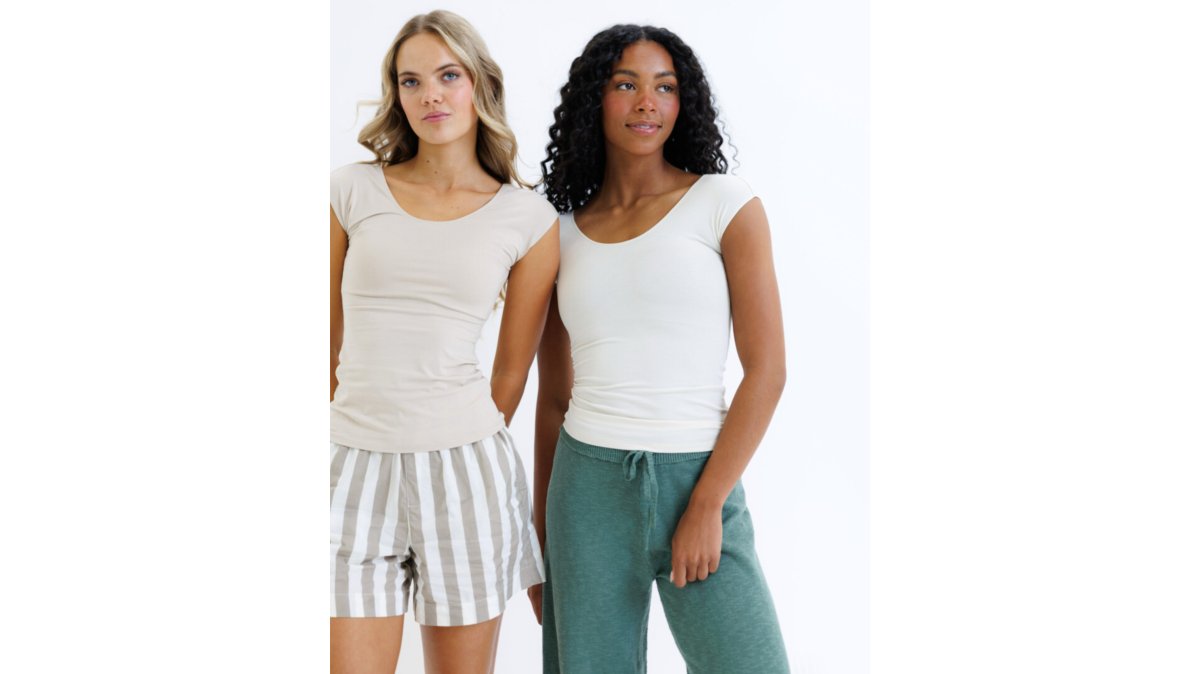
For bottoms, the Queen Aset High Waisted Leggings at $85.62 pair a premium blend of 88% microfiber polyester and 12% spandex with flatlock stitching that prevents tearing during movement. The integrated waistband pocket adds practical function without compromising the sleek silhouette. Sublimation printing, rather than screen printing, keeps the bold artist-designed patterns vibrant through dozens of washes.

The Women's Ultra Skinny Mid-Rise Insta Soft Jeans at $50.08 demonstrate how denim can feel like loungewear. The brushed, cotton-rich hand-feel and Power Stretch denim offer over 60% elasticity, while the limitless stretch waistband prevents gaping at the back, a common complaint with traditional jeans.
For warmer months, the Women's Cotton Linen Tapered Cropped Pants at $46.07 combine linen's breathability with cotton's softness in a relaxed elastic-waist silhouette. The Prep & Pretty Pullover at $36.40 elevates the classic cotton sweatshirt with lace-trimmed dropped shoulders, proving that comfortable fabrics can still feel special.

Conclusion
Building a comfortable everyday wardrobe is less about following trends and more about understanding how fiber content, weave, and construction affect how a garment feels after eight hours of wear. Prioritize breathable natural fibers blended with stretch synthetics, and always check care instructions before committing to a purchase.
Explore our collection and find the comfortable everyday wear pieces that work as hard as you do.
Frequently Asked Questions
What is the most comfortable fabric to wear daily?
Cotton and modal blends consistently rank as the most comfortable fabrics for daily wear. Cotton offers breathability and a soft hand-feel, while modal adds drape and resists shrinkage. A tri-blend of 55% cotton, 40% modal, and 5% spandex, like our Essential Tee, delivers stretch and recovery that holds its shape through a full day. For bottoms, look for high-waisted leggings with four-way stretch and flatlock stitching to prevent chafing and tearing.
Which fabrics are most breathable for all-day comfort?
Natural fibers like cotton and linen excel at breathability because their cellulose-based structure allows air to circulate. Bamboo viscose is another top choice, as it is naturally temperature-regulating and moisture-wicking, making it ideal for sleepwear or loungewear. For warm climates, linen's loose weave promotes airflow, while cotton jersey offers a soft, everyday option. Avoid high percentages of polyester in fitted garments, as it traps heat and moisture against the skin.
What's better for comfort, 100% cotton or a cotton blend?
A cotton blend often outperforms 100% cotton for everyday comfort. While pure cotton is soft and absorbent, it lacks elasticity and can lose its shape or shrink after washing. Blending cotton with modal or spandex improves tensile strength and adds stretch for better mobility. For example, our Essential Tee uses a 55% cotton, 40% modal, and 5% spandex mix, which provides the breathability of natural fibers with the recovery of synthetics, reducing sagging at the elbows and neckline.
What are the best low-maintenance fabrics for busy lifestyles?
For busy schedules, prioritize fabrics that resist wrinkles and pilling. Lyocell and modal, both cellulose-based semi-synthetics, are naturally wrinkle-resistant and require no ironing. Stretch denim with over 60% elasticity, like Insta Soft jeans, offers comfort while maintaining structure. Cotton linen blends are also forgiving, but they do wrinkle; choose a tapered cropped style that embraces a relaxed look. Always check care instructions, and favor pieces that are machine-washable on a gentle cycle.
How do I choose fabrics that are both comfortable and durable?
Assess fabric weight using GSM (grams per square meter). For everyday tops, a mid-weight jersey between 150-180 GSM offers opacity without feeling heavy. For bottoms, examine the weave: a tight knit resists pilling better than a loose one. Look for fabrics with added spandex or elastane, which improve recovery and prevent bagging. The Queen Aset leggings, made with 88% microfiber polyester and 12% spandex, use flatlock stitching to prevent seam tears, extending the garment's lifespan significantly compared to standard leggings.
What is the 3-3-3 rule for clothes?
The 3-3-3 rule is a styling method to simplify outfit choices: pick 3 tops, 3 bottoms, and 3 pairs of shoes to create a week of outfits. It works best when your clothing is made from versatile, comfortable fabrics. Choose neutral-toned cotton tees, modal joggers, and stretch jeans that can be mixed and matched. This approach reduces decision fatigue and ensures every piece you own gets worn, which is a practical strategy for building a functional everyday wardrobe.
Fabric choice is the hidden variable in how confident and at ease you feel all day. Fashion For Today designs every piece with comfort-first blends, four-way stretch, and thoughtful details like integrated pockets and flatlock stitching. Get started with Fashion For Today and build a wardrobe that feels as good as it looks.
