

Best Sustainable Clothing Brands for Women 2026
Table of Contents
- What Makes a Clothing Brand Truly Sustainable?
- Ethical Fashion Certifications Explained
- Best Sustainable Clothing Brands for Women: Our Top Picks
- Affordable Sustainable Clothing Brands Worth Knowing
- How to Build a Sustainable Capsule Wardrobe
- Sustainable Clothing Brands and End-of-Life Garment Management
- Frequently Asked Questions
Last Updated: August 28, 2026
Conscious shoppers are getting smarter, and the fashion industry knows it. Greenwashing is everywhere, certifications are confusing, and the sheer volume of brands claiming to be "eco-friendly" makes it genuinely hard to know where to spend your money. At Fashion For Today, we've sorted through the noise to give you a practical, honest guide to the best sustainable clothing brands for women, what they're actually doing right, what to watch out for, and how to build a wardrobe you feel good about wearing.
Quick Picks:
- Best for Everyday Basics: Natural fiber brands using organic cotton and linen
- Best for Work-to-Weekend: Versatile, ethically manufactured pieces with supply chain transparency
- Best for Eco-Friendly Loungewear: Bamboo and silk sets with biodegradable fibers
- Best Budget Option: Affordable sustainable clothing brands with strong cost-per-wear value
What Makes a Clothing Brand Truly Sustainable?
A truly sustainable clothing brand minimizes environmental harm across its entire supply chain, from fiber sourcing through manufacturing, distribution, and end-of-life garment management. Real sustainability requires looking at the whole picture, not just one element like organic cotton.
Here's what actually separates a genuinely ethical brand from one with good marketing:
- Fiber sourcing: Are materials certified organic, recycled, or biodegradable? Look for organic cotton, recycled polyester, hemp, linen, Tencel, and plant-based dyes.
- Manufacturing conditions: Are workers paid a living wage? Is ethical manufacturing verified by a third party?
- Carbon footprint: Does the brand track and offset emissions? Is zero-waste production a stated goal?
- Supply chain transparency: Can the brand trace every step from raw material to finished garment?
- Garment longevity: Are pieces designed to last, or to be replaced seasonally?
Sustainable vs. Ethical Fashion: The Real Difference
Sustainable fashion focuses on environmental impact: reducing waste, using eco-friendly materials, and lowering carbon footprint. Ethical fashion focuses on human impact: fair wages, safe labor conditions, and ethical sourcing. The best brands address both.
How to Spot Greenwashing Before You Buy
Greenwashing is when a brand uses environmental language without making meaningful changes. According to the Federal Trade Commission's Green Guides, vague claims like "eco-friendly" or "natural" without specific supporting evidence are considered deceptive marketing.
Red flags to watch for:
- No third-party certifications listed anywhere on the site
- Sustainability claims limited to packaging, not production
- No information about labor conditions or wages
- A "conscious collection" that represents a tiny fraction of total output
- No supply chain traceability information
If a brand can't tell you where its fabric was woven, that's your answer.
Ethical Fashion Certifications Explained
Certifications represent third-party verification of claims that would otherwise require a factory audit to confirm.
GOTS, Fair Trade, and B Corp: What Each One Means
GOTS (Global Organic Textile Standard) is the gold standard for organic fiber certification. It covers the entire textile supply chain from harvesting through environmentally and socially responsible manufacturing. A GOTS label means the fabric is at least 70% certified organic fibers and production meets strict ecological and labor requirements. GOTS certification standards outlines exactly what brands must demonstrate to earn and maintain this certification.
Fair Trade Certified focuses on labor conditions and fair wages. Brands carrying this certification have been independently verified to pay workers fairly and provide safe working conditions.
B Corp Certification evaluates a company's overall social and environmental performance, accountability, and transparency. A B Corp fashion brand has been audited across governance, workers, community, environment, and customers.
| Certification | Focus Area | What It Verifies |
|---|---|---|
| GOTS | Environmental + Labor | Organic fiber content, safe dyes, fair production |
| Fair Trade | Labor | Living wage, safe conditions, worker rights |
| B Corp | Whole company | Governance, environmental, social accountability |
| OEKO-TEX Standard 100 | Chemical safety | No harmful substances in finished garment |
| Bluesign | Manufacturing | Water, energy, chemical use in textile production |
Best Sustainable Clothing Brands for Women: Our Top Picks
The sustainable clothing brands worth your money can explain exactly what they're doing and why. Look for specific materials, named factories, and published impact reports.
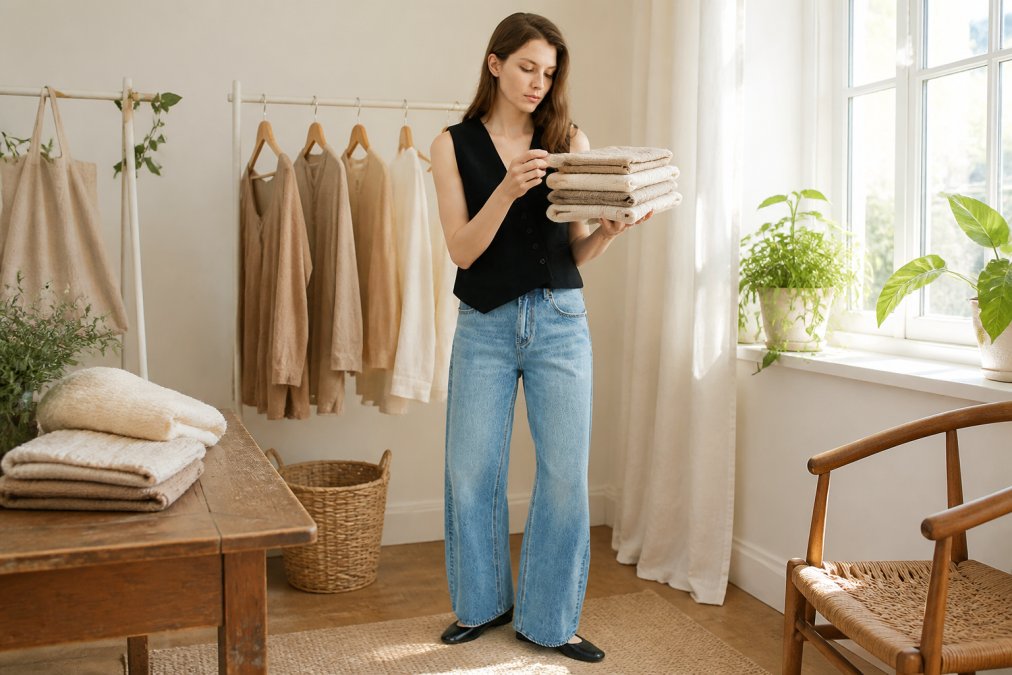
Fashion For Today's curated collection leads our recommendations for women who want versatile, high-quality pieces that balance style with conscious consumerism.
Best for Everyday Basics: Natural Fiber Brands
Natural fiber basics are the foundation of any sustainable capsule wardrobe. A well-made cotton tee worn 200 times has a far lower environmental impact than a cheap one worn 15 times before it pills and fades.
The Essential Tee ($13.00) is a strong starting point. Made from a 55% cotton, 40% modal, 5% spandex tri-blend, it offers the softness of natural fibers with enough stretch for all-day comfort.

For bottoms, the Women's Cotton Linen Tapered Cropped Pants ($46.07) deliver on the linen promise: breathable, seasonally versatile, and made from a natural biodegradable fiber that doesn't shed microplastics into waterways.
Best for Work-to-Weekend Versatility
The Scallop Tee ($28.60) is cut from soft cotton stretch in dusty blue with scalloped trim at the V-neckline and gathered sleeves, making a basic tee feel intentional enough for a professional setting. It pairs equally well under a blazer or with linen trousers for a weekend brunch.

The Slope Curve Jeans HJ039 ($108.00) are worth the investment. 100% cotton, high-rise, relaxed wide leg, this silhouette works from a desk to dinner without looking overdone. The non-stretch denim holds its shape wash after wash, which matters for garment longevity. Note that the size runs big; sizing down is recommended.

Best for Eco-Friendly Loungewear and Sleepwear
The Women's Bamboo Stretch-Knit Long Sleeve Pajama Set ($175.77) is crafted from 95% bamboo viscose and 5% spandex. Bamboo is a fast-growing crop that requires no pesticides and minimal water. The fabric is naturally temperature-regulating and moisture-wicking.
The Women's Pure Silk Camisole Pajama Set in Burgundy Red ($141.39) uses Mulberry silk, a natural protein fiber that is biodegradable and produced without synthetic chemicals.
Affordable Sustainable Clothing Brands Worth Knowing
True sustainability has real costs: living wages, certified organic materials, and ethical manufacturing all add to the price of a garment. The more useful frame is value, not just price.
Cost-Per-Wear: Why Spending More Often Costs Less
Cost-per-wear is the single most useful concept in sustainable fashion.
The formula is simple: Cost-per-wear = purchase price ÷ number of times worn.
A $13 Essential Tee worn 100 times costs $0.13 per wear. A $8 fast fashion tee that pills after 15 washes costs $0.53 per wear. The cheaper item costs four times more per actual use and ends up in landfill far sooner.
| Item | Purchase Price | Estimated Wears | Cost Per Wear |
|---|---|---|---|
| Essential Tee ($13 cotton-modal blend) | $13.00 | 100+ | ~$0.13 |
| Scallop Tee ($28.60 cotton stretch) | $28.60 | 80+ | ~$0.36 |
| Slope Curve Jeans ($108 100% cotton denim) | $108.00 | 150+ | ~$0.72 |
| Cotton Linen Cropped Pants ($46.07) | $46.07 | 60+ | ~$0.77 |
| Fast fashion synthetic tee (typical) | ~$12.00 | 15-20 | ~$0.70 |
According to the EPA's overview of textile waste in the US, Americans throw away more than 11 million tons of textiles annually. Most is fast fashion with a short useful life. Buying less and buying better is the most direct action an individual consumer can take.
How to Build a Sustainable Capsule Wardrobe
A sustainable capsule wardrobe is a small, intentional collection of high-quality, versatile pieces that can be mixed and matched to cover every occasion. The goal is to own fewer items that you actually wear.
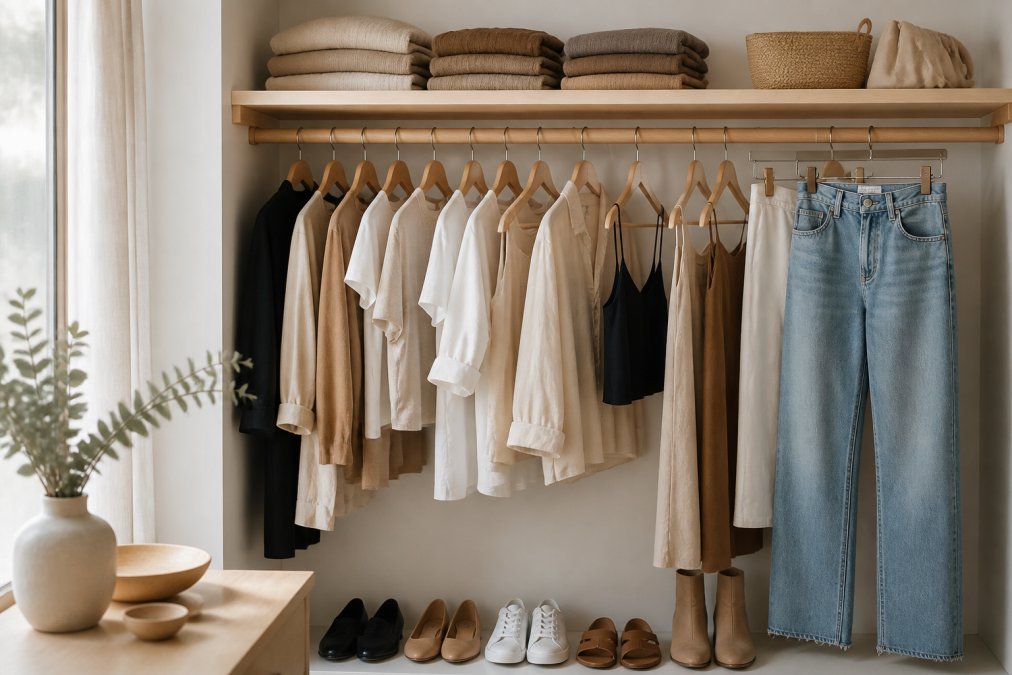
Start with a core of natural fiber basics:
- 2-3 well-fitting cotton or modal tees in neutral tones
- 1-2 pairs of quality denim or linen trousers
- 1 versatile top that transitions from work to evening
- 1 set of quality loungewear or sleepwear in a natural fiber
- 1-2 layering pieces (a cardigan, a blazer, or a light jacket)
The Fashion For Today collection maps cleanly onto this framework: the Essential Tee and Scallop Tee cover your basics and elevated casual needs, the Slope Curve Jeans and Cotton Linen Cropped Pants handle your bottom half across seasons, and the bamboo or silk pajama sets round out your at-home wardrobe.
As the Sustainable Apparel Coalition's Higg Index documents, the production of a single garment generates significant environmental impact. Every piece you choose not to buy, because your existing wardrobe already covers the need, is a real reduction in that impact.
Size Inclusivity and Finding Pieces That Actually Fit
Size inclusivity is one of the most overlooked issues in sustainable fashion. Many ethical brands have historically offered limited size ranges, forcing larger-bodied women to shop fast fashion by default.
When shopping sustainable clothing brands, check the size range before falling for the mission statement. Detailed flat-lay measurements let you match the garment to your actual body rather than guessing from a standard size chart. The Slope Curve Jeans come with a specific note: the size runs big, and sizing down is recommended. That kind of transparency is exactly what you need when ordering online.
Sustainable Clothing Brands and End-of-Life Garment Management
Most sustainability guides stop at the point of purchase. That's the wrong place to stop. End-of-life garment management is where the biggest environmental gains are still available.
Here are the options, ranked by environmental impact:
-
Repair: The most sustainable option. A loose button, a small tear, or a worn hem can extend a garment's life by years. Natural fiber garments like cotton denim and linen are particularly repairable.
-
Resell or donate: The second-hand market keeps quality pieces in use and out of landfill.
-
Swap: Clothing swaps with friends or through organized community events extend garment life at zero cost and zero new production.
-
Brand take-back programs: Some sustainable clothing brands offer take-back or recycling programs for worn garments.
-
Textile recycling: When a garment is truly beyond wear, textile recycling programs can recover fiber for industrial use. Many municipalities and retailers offer drop-off points.
-
Compost (natural fibers only): Garments made from 100% natural, undyed fibers, pure cotton, linen, hemp, or wool, are technically compostable after removing synthetic components like zippers and elastic.
Choose garments from the start that have a clear end-of-life path. A 100% cotton tee, a linen trouser, a silk camisole, these all have viable end-of-life options. According to the Ellen MacArthur Foundation's circular economy research, the fashion industry's shift toward circular economy models is one of the highest-impact levers available for reducing global textile waste.
Choosing the best sustainable clothing brands for women takes more than reading a mission statement. The real work is in understanding certifications, evaluating materials, doing the cost-per-wear math, and thinking about what happens to a garment after you're done with it. Fashion For Today's collection of natural fiber basics, versatile work pieces, and eco-friendly loungewear gives you a practical starting point, quality pieces designed to be worn often and kept long. Shop the Perfect LBD Here and build a wardrobe that works as hard as you do.
Frequently Asked Questions
What materials should I look for when shopping for sustainable clothing?
Prioritize organic cotton, linen, hemp textiles, Tencel (lyocell), and bamboo viscose. These biodegradable fibers require fewer pesticides and less water than conventional cotton. Recycled polyester is a solid choice for activewear, since it diverts plastic from landfills. Deadstock fabric and vegan leather made from plant-based materials are also worth seeking out. Check fiber content labels and look for GOTS or OEKO-TEX certification to confirm the claim is backed by a third party.
Are there affordable sustainable clothing brands for women?
Yes, though 'affordable' is easier to judge through cost-per-wear than sticker price. A $13 Essential Tee in a durable cotton-modal blend that holds its shape through dozens of washes outperforms a $5 fast-fashion tee that pills after ten. Brands focused on slow fashion and natural fibers tend to price pieces higher upfront, but garment longevity means you replace them less often. Shopping second-hand markets and capsule wardrobe basics are the fastest ways to cut costs without sacrificing ethics.
What is the difference between ethical fashion and sustainable fashion?
Sustainable fashion focuses on environmental impact: materials, carbon footprint, zero-waste production, and the circular economy. Ethical fashion centers on people: fair wages, safe labor conditions, supply chain transparency, and living wage guarantees for garment workers. The best sustainable clothing brands for women address both. A brand can use organic cotton but still run exploitative factories, so checking certifications like Fair Trade alongside eco-friendly material claims gives a fuller picture.
How can I verify if a clothing brand is truly sustainable?
Start with certifications: GOTS confirms organic fiber standards and ethical manufacturing, Fair Trade verifies fair wages, and B Corp measures overall social and environmental performance. Beyond badges, look for supply chain traceability, brands that name their factories and publish audit results. If a brand uses vague language like 'eco-conscious' without any third-party verification, that is a greenwashing signal. Checking the brand's annual impact report, if one exists, is the most direct way to assess real commitment.
What should I do with clothing I no longer wear?
End-of-life garment management is one area most sustainable fashion guides skip. Options include donating to verified textile recyclers, selling through second-hand market platforms, returning to brands that run take-back programs, or repurposing fabric as cleaning cloths. Avoid landfill disposal when possible, since synthetic blends can take decades to break down. Natural fibers like linen and cotton are biodegradable, which is one more reason material choice matters well beyond the initial purchase.
This article was written using GrandRanker
