

How to Find Clothes That Fit Properly
Table of Contents
- Why Proper Fit Matters More Than Size
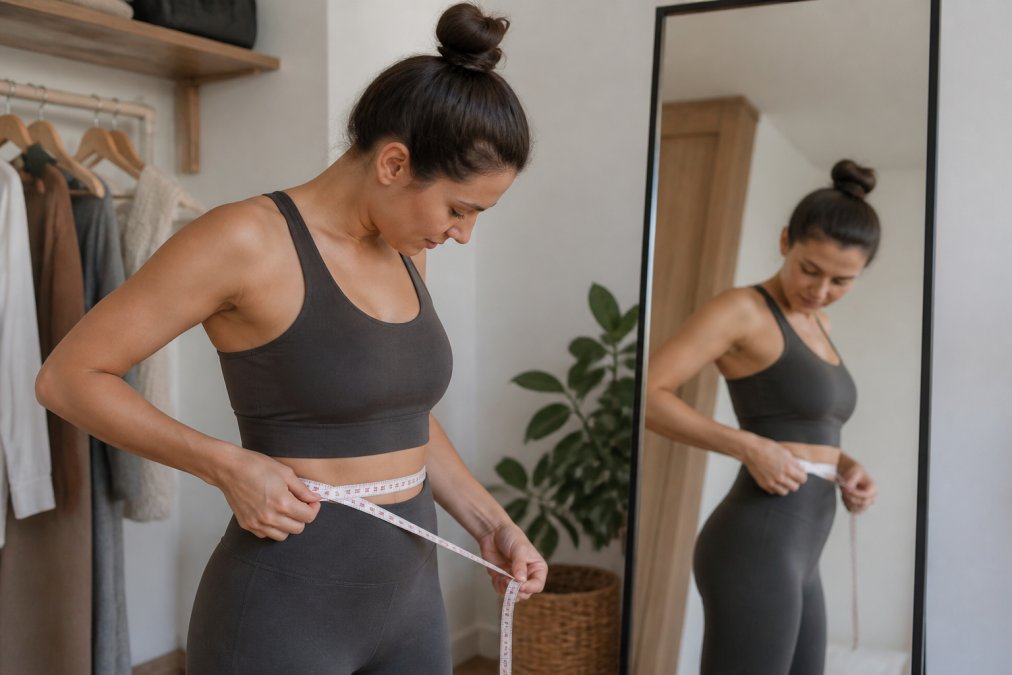
- How to Take Body Measurements for Clothing
- How to Find Your Body Shape and Proportions
- The Fit Check: What to Look For When Trying On Clothes
- Understanding Fit vs. Size Across Brands
- Benefits of Tailoring Clothes for a Custom Fit
- Online Shopping Fit Tools and How to Use Them
- Common Fit Mistakes to Avoid
- Frequently Asked Questions
Last Updated: August 30, 2026
Why Proper Fit Matters More Than Size
Finding clothes that fit properly is the single biggest factor separating a confident appearance from one that falls flat. A size 10 that drapes beautifully beats a size 8 that pulls at the seams. How a garment sits on your body determines whether you look polished or disheveled, affecting how you move, feel, and how others perceive you.
At Fashion For Today, customers who understand fit principles build lasting wardrobes. They keep pieces longer, feel more confident, and actually reach for those items repeatedly. The gap between "close enough" and truly well-fitting clothes comes down to understanding your body measurements, knowing what to look for during a fit check, and being willing to invest in alterations when needed.
How to Take Body Measurements for Clothing
Taking accurate body measurements is the foundation for finding clothes that fit properly. Proper measurement takes fifteen minutes and changes everything about how you shop (the NIH).
What You'll Need
- A soft measuring tape (the flexible fabric kind, not a rigid ruler)
- A mirror, ideally full-length
- Comfortable, fitted clothing or undergarments
- Pen and paper to record measurements
- A friend to help (optional but helpful for hard-to-reach areas)
Step-by-Step Measurement Guide
Step 1: Measure Your Bust [Time: 2 minutes]
Wear an unpadded bra or fitted top. Stand straight with your arms at your sides. Wrap the measuring tape around the fullest part of your chest, keeping it parallel to the ground. The tape should sit snugly but allow one finger to slip underneath. Record this number.
Step 2: Measure Your Waist [Time: 2 minutes]
Find your natural waistline by bending slightly to the side and locating where your body naturally creases. Measure around this point without pulling the tape tight.
Step 3: Measure Your Hips [Time: 2 minutes]
Stand with feet hip-width apart. Measure around the fullest part of your hips and buttocks, keeping the tape parallel to the ground.
Step 4: Measure Your Inseam [Time: 3 minutes]
Wear the shoes you plan to wear with pants. Have someone measure from your inner thigh down to your ankle bone, or measure from your crotch seam down to where you want pants to end.
Step 5: Measure Your Sleeve Length [Time: 2 minutes]
Extend your arm out to the side at shoulder height. Measure from the center back of your neck, across your shoulder, down to your wrist bone.
Step 6: Measure Your Shoulder Width [Time: 2 minutes]
Stand straight and measure across the back from shoulder bone to shoulder bone.
Record all measurements and keep them accessible when shopping online.
How to Find Your Body Shape and Proportions
Understanding your body shape and proportions is crucial for finding clothes that fit properly. Body shapes generally fall into categories: pear-shaped (wider hips than bust), apple-shaped (fuller midsection), hourglass (balanced bust and hips with defined waist), rectangle (similar bust and hip measurements), and inverted triangle (wider shoulders than hips).
Once you know your shape, you can make intentional choices about fit and cut. A pear-shaped body looks balanced in a top with structure at the shoulders paired with a-line or bootcut bottoms. An hourglass figure shines in fitted styles that emphasize the waist. Rectangle body types often look great in styles that create definition through layering, belts, or structured fabrics.
Clothes that fit properly work WITH your proportions, not against them. When you choose styles suited to your body type, alterations become minimal and your confidence increases.
The Fit Check: What to Look For When Trying On Clothes
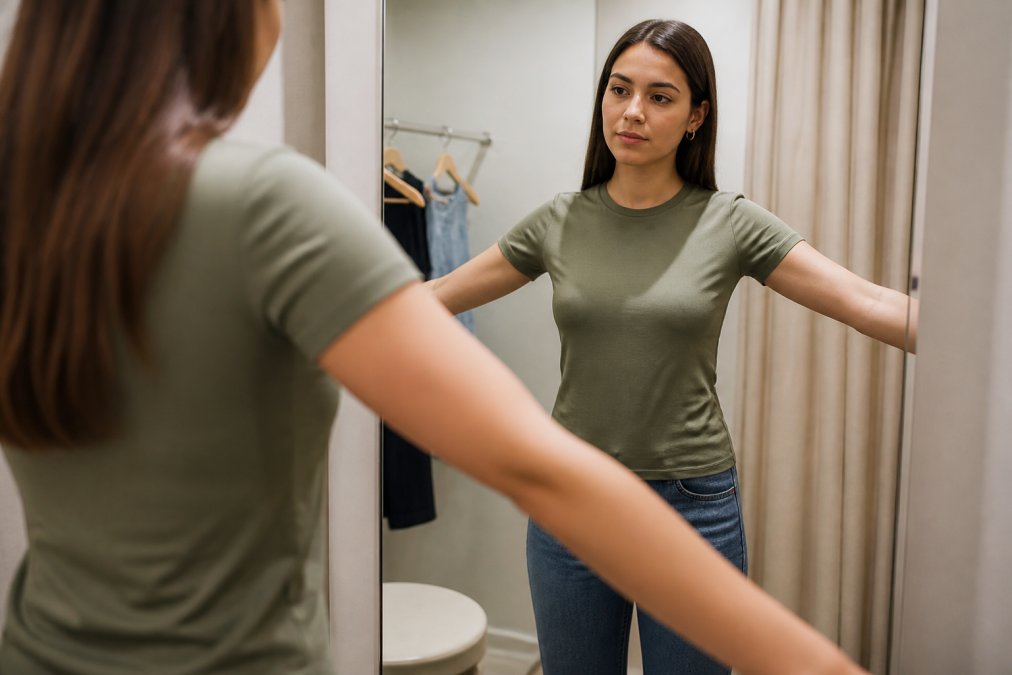
A proper fit check takes two minutes and reveals whether a garment is worth buying.
Shoulder Seams and Armscye
The shoulder seam should sit right at your shoulder bone, not drift toward your neck or slip down your arm. Raise your arms slightly, the seam should stay in place without tugging. Shoulder fit is one of the hardest things to alter, so getting this right during selection matters enormously.
Sleeve Length and Inseam
Sleeves should end at your wrist bone, leaving about a half-inch of your wrist visible (the FDA). When you wear the garment with the shoes you'll pair it with, pants should graze the top of your shoe without bunching or dragging. Sleeve and inseam length are among the easiest things to tailor, so don't reject a garment solely because the length is slightly off.
Fabric Tension and Drape
Look for pulling, puckering, or excessive fabric bunching. Pulling occurs when a garment is too tight; gaping happens when there's too much space between fabric and your body. Quality fabrics drape smoothly without clinging or creating unflattering silhouettes.
Understanding Fit vs. Size Across Brands
Size numbers mean almost nothing across different brands. A size 8 at one retailer might fit completely differently than a size 8 at another. Brands cut garments differently based on their target customer and production methods.
The solution is to use your body measurements as your reference point, not the size label. When shopping online, check the brand's size chart and compare it to your actual measurements. If the brand's size 10 has a 34-inch bust and your bust measures 35 inches, that size 10 will likely be too snug.
Fashion For Today recognizes that fit varies across their collection, which is why understanding your measurements matters more than chasing a specific size. Some of their pieces, like the Women'S Luscious Curvy Bootcut Mid-Rise Insta Stretch Juniors Jeans, come in both standard and plus options to accommodate different body types.

When you stop obsessing over the number and focus on how a garment actually fits your body, shopping becomes easier and more successful.
Benefits of Tailoring Clothes for a Custom Fit
Tailoring transforms a good fit into a perfect fit. Common adjustments include hemming pants and skirts, taking in seams for a more fitted silhouette, and adjusting sleeve length. These alterations typically cost between fifteen and fifty dollars depending on complexity.
The real benefit of tailoring is confidence. When clothes fit your body exactly, you feel the difference. You move more freely and look put-together. Tailoring also extends the life of your wardrobe, a well-fitting garment you love becomes a staple you reach for repeatedly.
For pieces you plan to keep long-term, tailoring is absolutely worth the investment. For classic pieces like the Arc Jean or Slope Curve Jeans from Fashion For Today, a proper fit through tailoring ensures you'll wear them for years.

Online Shopping Fit Tools and How to Use Them
Many online retailers now offer fit prediction tools and virtual try-on technology. Size recommendation tools ask for your measurements and compare them to the brand's size chart, which is far more reliable than guessing based on your typical store size.
Some retailers offer fit quizzes that ask about your body shape, fit challenges, and style preferences. Virtual try-on technology uses photos or video to show how a garment looks on your body type. These tools are improving rapidly and can give you a much better sense of how something will actually look on you.
Provide accurate information when using these tools. Measure yourself properly, be honest about your body shape and fit challenges, and use the recommendations as a starting point. Even the best fit tool isn't perfect, which is why reading customer reviews about how a specific garment fits is still valuable.
Common Fit Mistakes to Avoid
Mistake 1: Ignoring the Shoulder Seam
The shoulder seam is the hardest part of a garment to alter. A garment with perfect shoulder placement but slightly long sleeves is a better buy than one with poor shoulder fit but perfect sleeve length.
Mistake 2: Buying Based on Size Number Alone
Brands vary too much. Always try things on or check the size chart when shopping online. Your measurements matter far more than the size label.
Mistake 3: Accepting Pulling and Gaping
If a garment pulls at the bust, thighs, or gaps at the waist, it's not the right size or cut for your body.
Mistake 4: Forgetting About Fabric Composition
A garment made from quality fabric with good drape will fit better and look better than one made from cheap material. Check fabric content before purchasing.
Mistake 5: Skipping the Full-Length Mirror Check
Look at yourself in natural light and from multiple angles. This gives you a realistic sense of how the garment actually looks.
Mistake 6: Not Considering Your Lifestyle
A perfectly fitted garment you never wear because it's too formal or too casual for your life isn't a good purchase.
Finding clothes that fit properly is about understanding your body, knowing what to look for, and being willing to invest in alterations when needed. Start by taking your measurements, understanding your proportions, and learning what proper fit looks like on your body. Then, when you shop, use that knowledge to make intentional choices. The result is a wardrobe that works for you, not against you.
Fashion For Today's collection includes pieces designed with fit in mind, from jeans with stretch technology that adapts to your body to dresses with construction that flatters different silhouettes.

Frequently Asked Questions
Why is it important to know your body measurements for online shopping?
Body measurements are the foundation of finding clothes that fit properly, especially when shopping online where you can't try items on. Knowing your exact measurements for bust, waist, hips, inseam, and sleeve length helps you compare against brand sizing charts and catch inconsistencies before purchasing. This reduces returns and ensures you order sizes that actually match your proportions rather than guessing based on the number on the label.
What is the difference between size and fit?
Size is the number or label a brand assigns (like 8, 12, or M), while fit is how a garment actually drapes on your body. Two different brands can have completely different sizing standards, yet both fit you perfectly. Proper fit means shoulder seams align with your shoulders, sleeves hit your wrists, and fabric skims your silhouette without pulling or gaping. Size consistency varies across retailers, so understanding fit helps you find clothes that flatter your body type regardless of the label.
How can I tell if a piece of clothing is high quality when ordering online?
Look for product descriptions that mention fabric composition, weight, and construction details. Higher-quality pieces typically use natural fibers or premium blends, have reinforced seams, and include details like finished hems. Check customer reviews for mentions of durability, fabric drape, and whether the garment holds its shape after washing. Brands transparent about their materials and manufacturing tend to stand behind quality. Fashion For Today's collections emphasize both comfort and aesthetic appeal.
What should I do if something doesn't fit right after it arrives?
First, try the garment on in natural lighting and assess fit against the checklist: shoulder seams, sleeve length, waistline placement, and fabric drape. If it's close but not perfect, tailoring can fix most issues affordably. If the fit is significantly off or the quality doesn't meet expectations, check the return policy before your return window closes. Many retailers offer free returns or exchanges, which gives you flexibility to try multiple sizes or styles. Always document the condition and follow return instructions carefully to ensure a smooth process.
This article was written using GrandRanker
