

How to Shop for Clothes Online Safely: 2026 Guide
Table of Contents
- Step 1: Check Website Security Before You Browse
- Step 2: Pick the Best Payment Methods for Online Shopping Security
- Step 3: Learn How to Find Clothes That Fit Properly
- Step 4: Vet the Retailer Before You Buy
- Step 5: Use AI Tools and Visual Search to Shop for Clothes Online Safely
- Step 6: Build a Budget and a Wish List That Protects You
- Step 7: Practice Cybersecurity Hygiene and Verify Sustainable Claims
- Conclusion: Shop Confidently, Not Recklessly
- Frequently Asked Questions
Last Updated: September 14, 2026
Step 1: Check Website Security Before You Browse
Learning how to shop for clothes online safely starts with one habit: inspect the website before you inspect the clothes. A secure store shows a padlock icon and an address beginning with "https" in your browser bar. That "s" means your connection is encrypted, so your login details and card number travel in a sealed envelope rather than a postcard.
While you're at it, click the store's privacy policy and contact page. A legitimate retailer lists a real address, a working phone line, and clear terms about how it handles your data. If a site hides behind a contact form and nothing else, close the tab.
Two-factor authentication is your second layer of defense. When a store offers it, turn it on. Even if someone steals your password, they can't get in without the code sent to your phone.
FTC guidance on secure online shopping
Step 2: Pick the Best Payment Methods for Online Shopping Security
The best payment methods for online shopping security are credit cards and virtual card numbers, not debit cards or direct bank transfers. Credit cards carry federal fraud protection that limits your liability for unauthorized charges, and virtual cards go further by masking your real number entirely.
Here's the practical breakdown:
- Virtual credit cards: Your bank or card issuer generates a one-time number tied to a single merchant. If that number leaks, it's useless elsewhere.
- Credit cards: Strong dispute rights if a package never arrives or arrives wrong.
- Payment apps and bank transfers: Convenient, but recovering money after fraud is far harder.
- Storing cards on file: Skip it unless the retailer is one you've vetted and use often.
CFPB consumer information on credit card fraud liability
Step 3: Learn How to Find Clothes That Fit Properly
Learning how to find clothes that fit properly begins with a soft measuring tape and ten honest minutes. Take your bust, waist, and hip measurements over light clothing, then compare them to each store's size chart rather than assuming you're "always a medium." Sizing inconsistency between brands is the single biggest reason online orders get returned.
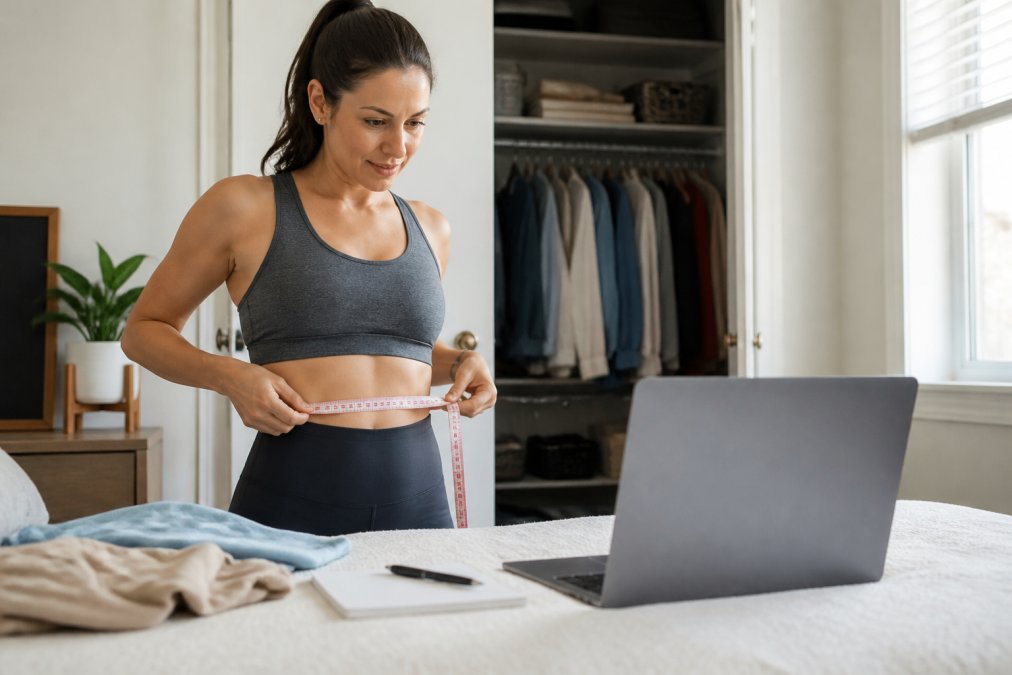
Two numbers deserve special attention. Your inseam, measured from crotch to ankle, determines whether pants actually reach your shoes. Your waist circumference at its narrowest point tells you more than any letter size.
At Fashion For Today, our fit guides list garment measurements so you can match your numbers to the actual piece. Fabric composition matters too: a cotton-elastane blend stretches with you, while stiff linen holds its shape but less forgivingly.
Step 4: Vet the Retailer Before You Buy
Vetting a retailer takes five minutes and saves weeks of frustration. Most guides stop at "read the reviews." That's not enough, because review sections can be gamed. Here's a layered approach that surfaces the signals fake storefronts can't easily hide.
Start with the domain, not the design. A polished homepage costs nothing to clone. A domain that's been registered for years is harder to fake. Paste the store's URL into a WHOIS lookup (most registrars offer one free) and check the registration date. A clothing site that claims a decade of heritage but whose domain was registered eight months ago is a red flag. So is a domain registered for only one year, legitimate retailers typically renew for multiple years at a time.
Read the three-star reviews, not the five-star ones. Five-star reviews tell you what went right; middling reviews tell you what goes wrong consistently. Sort by "most recent" as well as "most helpful", a wall of five-star reviews clustered on a single date is a common pattern for purchased reviews. Look for reviewers who mention specific details: fabric weight, actual fit on a specific body type, how a return was handled. Vague praise ("love it!") with no specifics is worth less than a detailed three-star review.
Reverse-image search the product photos. Upload a hero product image to a reverse image search tool. If the same photo appears on a dozen unrelated domains, often with different brand names, you're looking at a dropshipper reselling a generic item, not a retailer with its own inventory. This single check catches more sketchy stores than any review scan.
Find the return policy and read it fully. Look specifically for:
- Return windows and whether they start at purchase or delivery
- Restocking fees that quietly shrink your refund
- Who pays return shipping
- Whether sale items are final sale
- Whether returns require the original packaging or tags
A retailer with a clear, generous return policy is confident in its product. One that buries the terms behind three clicks is telling you something. Watch for policies that require you to email for a return authorization with no stated turnaround, that's a common delay tactic.
Check the contact page for a real address and phone number. A legitimate retailer lists a physical address and a working phone line. If the only contact method is a web form, and the "About" page uses generic stock photography of models rather than the team or the studio, treat the store as unverified.
Look for a business registration or trust seal you can verify. Trust seals are only meaningful if you can click through and confirm the store is actually listed. A seal image that doesn't link anywhere is decoration.
FTC guidance on online shopping and avoiding scams
Step 5: Use AI Tools and Visual Search to Shop for Clothes Online Safely
AI tools and visual search have changed how people shop for clothes online, and they can work in your favor. Upload a photo of a dress you love, and visual search surfaces similar pieces across retailers. That saves hours of scrolling.
Use these tools with a filter. An AI recommendation is a starting point, not a verdict. Cross-check the suggested retailer's security and reviews before you buy, since a slick tool can point you toward an unfamiliar store.
Reverse image search also helps you verify that a "designer" piece isn't a drop-shipped knockoff. If the same photo appears on a dozen unrelated sites, that's your answer.
Step 6: Build a Budget and a Wish List That Protects You
A wish list is the simplest anti-impulse tool in online shopping. Add items you like, then wait 48 hours before buying. Most impulse purchases don't survive the wait, and your budget thanks you.
Set a monthly clothing budget and track it the same way you'd track groceries. When you do buy, prioritize versatile pieces, a blazer that works for meetings and dinners, a dress that moves from work to a date night. Fewer, better pieces beat a closet full of regrets.
Step 7: Practice Cybersecurity Hygiene and Verify Sustainable Claims
This is the section most guides skip. Fit advice is everywhere; a working security and verification routine is not. Here's what actually protects you after you've decided a store is worth buying from.
Treat every shopping account as a separate identity. Use a password manager to generate and store a unique password for each retailer. Reusing one password across stores means a single breach at a small shop exposes your email, your bank, and everything else. If you don't use a manager, at minimum never reuse your email password on a shopping site.
Turn on two-factor authentication wherever it's offered. A code sent to your phone or generated by an authenticator app stops most account takeovers even when a password leaks. Prefer an authenticator app over SMS when the store supports it, since SMS codes can be intercepted through SIM-swap attacks.
Use a virtual card number for unfamiliar retailers. Many major card issuers let you generate a one-time or merchant-locked card number from their app. The number is tied to a single merchant, so if it leaks, it's useless elsewhere. This is the single highest-leverage habit for shopping on a store you haven't bought from before.
Recognize the phishing patterns aimed at shoppers. The most common lure is a fake "order confirmation" or "shipping delay" email that asks you to log in to track a package. The link goes to a lookalike domain. Type the retailer's address into your browser yourself rather than clicking the link, and check the sender's actual domain, not the display name, before trusting any message about an order you don't remember placing. A second common pattern is a fake "refund" or "return approved" email that asks for your card number to process the refund; legitimate retailers refund to the original payment method and never ask for the number again.
Review statements monthly. Scan your card and bank statements for unfamiliar charges, especially small ones. Fraudsters often test a stolen card with a small charge before making a large one. Report anything you don't recognize to your issuer immediately, federal law limits your liability for unauthorized credit card charges, but only if you report promptly.
Verify sustainability claims against named standards. "Eco-friendly," "green," and "ethical" are not regulated terms in the United States, so any brand can use them. What you can verify are specific third-party certifications. Look for named programs such as OEKO-TEX (which tests for harmful substances in textiles), GOTS (Global Organic Textile Standard, for organic fiber content and processing), B Corp certification (for overall social and environmental performance), and Fair Trade Certified (for labor and sourcing standards). Each of these has a public directory you can search to confirm a brand is actually certified rather than just claiming to be.
Read the supply chain page for specifics, not adjectives. A brand that names its mills, lists fiber percentages, and publishes a tiered supplier list is doing more than one that says "we care about the planet." Vague green branding without named materials, named factories, or a verifiable certification is a marketing tactic, not a commitment. If a store can't tell you where a garment was made, assume the claim is aspirational.
Conclusion: Shop Confidently, Not Recklessly
Online shopping rewards the careful and punishes the rushed. Verify the site, protect your payment, measure before you order, and read the fine print.
Fashion For Today makes that easy, with detailed fit guides and a curated collection built on comfort and confidence. Explore our timeless dresses, everyday loungewear, and resort-ready swimwear.
Get started with Fashion For Today and shop the perfect LBD here.
Frequently Asked Questions
What is the safest way to pay when shopping for clothes online?
Use a credit card or a virtual credit card number generated by your card issuer. Credit cards offer fraud protection under federal law, so you are not liable for unauthorized charges. Avoid debit cards and direct bank transfers, which pull money straight from your account and are harder to reverse. Also skip any retailer that asks for payment through gift cards or wire transfers, since those are common phishing tactics.
How can I tell if an online clothing retailer is legitimate?
Check for HTTPS in the URL, a working customer support phone number or email, a physical business address, and a privacy policy that explains how your data is used. Read customer reviews on independent sites, not just the retailer's own page. Be wary of prices that seem far below market rate, pressure to buy immediately, or a checkout process that only accepts unconventional payment methods. A legitimate retailer will also have a clear return policy and order tracking.
What measurements do I need to find clothes that fit properly online?
Take your bust measurement around the fullest part, your natural waist circumference at the narrowest point, and your hip measurement at the widest part. For pants, also measure your inseam from crotch to ankle. Compare these numbers to each retailer's specific size chart, since sizing inconsistency between brands is common. If you fall between sizes, size up for woven fabrics and consider the fabric composition, because stretchy materials forgive a half-inch difference more easily.
How do I protect my personal information when creating accounts on fashion websites?
Use a unique password you do not reuse on other sites, and turn on two-factor authentication if the retailer offers it. Fill in only the required fields, and skip optional phone numbers or birthdates unless you need them for a loyalty program. Check the privacy policy to see whether your data is sold to third parties. If you are just browsing, consider guest checkout to limit your digital footprint, and use a virtual credit card for the purchase.
